
AI Eyes on the Road and a Bold USDOT Moonshot
DOT Tech News
August 3, 2026 · Transportation Technology Briefing
Good morning, DOT tech nerds and professionals. This week, New Hampshire is going all-in on AI cameras and telematics across its entire fleet, Honolulu's driverless rail just won the industry's top innovation prize, and USDOT is making a big swing at treating the whole U.S. transportation network as one giant problem to solve. Lots to dig into.
In this week's DOT Tech News:
- New Hampshire DOT Equips Patrol and Plow Fleets With AI Cameras for Real-time Crash and Road Condition Detection
- New Hampshire DOT Goes All-In on Geotab Telematics and AI Cameras Across Its Entire Fleet
- New Hampshire DOT Deploys Geotab Telematics and AI Cameras Across Its Entire State Fleet
- Honolulu's Driverless Skyline Rail Wins APTA's Top Innovation Award for Advanced Transit Technology
- USDOT Bets on AI to Treat the Entire U.S. Transportation Network as One Solvable Equation
New Hampshire DOT Equips Patrol and Plow Fleets With AI Cameras for Real-time Crash and Road Condition Detection
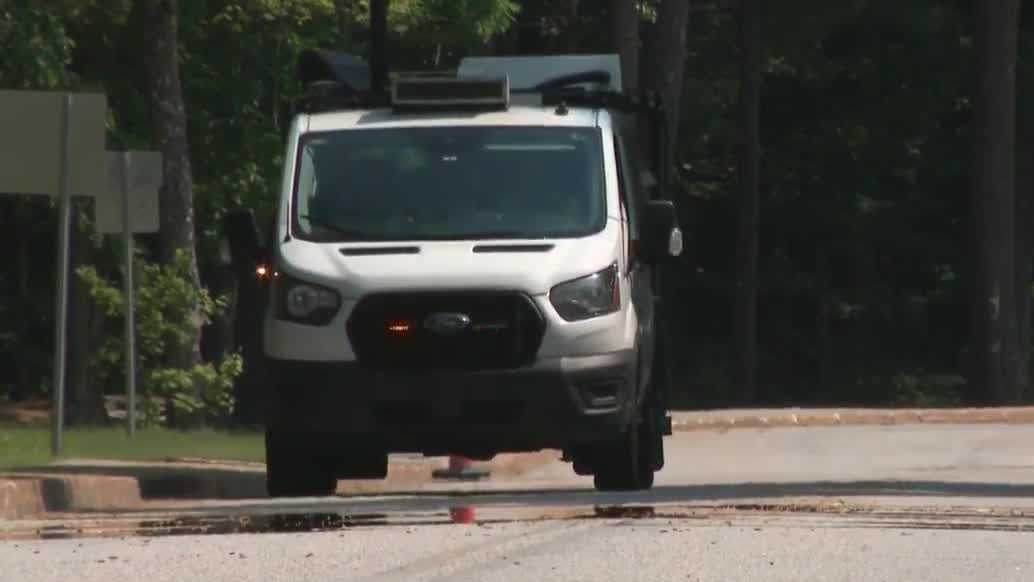
New Hampshire DOT is deploying AI cameras across its highway patrol and winter maintenance fleets to automatically detect crashes, log near-misses, and capture live road conditions.
Highway safety patrol vehicles will carry both front- and rear-facing AI cameras that analyze video onboard — no cloud upload required — flagging crashes and near-miss events as they occur. That onboard processing matters: it reduces latency and keeps critical safety data actionable in the field rather than buried in a footage backlog.
Winter service vehicles get forward-facing cameras tuned to a different mission — documenting road conditions, tracking plow progress, and recording storm-clearing activity in real time. That capability directly addresses a persistent gap in winter operations: supervisors and dispatch often lack live visibility into where treatment has been applied and what conditions remain.
The deployment signals growing appetite among state DOTs for AI-powered fleet instrumentation that serves dual purposes — liability documentation and operational intelligence — without requiring major infrastructure investment.
Why it matters: Vendors building fleet management, asset tracking, or AI video analytics tools should watch New Hampshire's deployment closely — it's an early indicator of where procurement conversations at peer state DOTs are heading.
Source: WMUR / New Hampshire Department of Transportation
New Hampshire DOT Goes All-In on Geotab Telematics and AI Cameras Across Its Entire Fleet

New Hampshire DOT selected Geotab to deploy telematics and AI camera systems across its entire statewide fleet, covering everything from highway safety patrol vehicles to snow plows.
NHDOT isn't running a single unified camera setup — it's tailoring the technology to each fleet's mission. Highway Safety Patrol vehicles get dual front- and rear-facing AI cameras that detect crashes and log near-misses in real time on active interstates. Winter Operations vehicles get forward-facing cameras capturing road conditions and storm-clearing progress as it happens. Every vehicle in the fleet receives core telematics.
The deployment consolidates vehicle tracking, engine diagnostics, and automated maintenance monitoring into one platform, replacing redundant manual logging processes. NHDOT aligned the rollout with New Hampshire RSA 266 equipment and safety compliance standards. Geotab's FedRAMP, SOC2, and FIPS 140-3 authorizations address the cybersecurity requirements state agencies can't ignore.
Long-term, NHDOT is building toward using the camera and telematics data to support infrastructure planning decisions and extend connected operations to off-road and specialized equipment — turning a fleet management tool into a broader asset management foundation.
Why it matters: This deployment gives other state DOTs a concrete, mission-differentiated blueprint for fleet telematics — and signals that vendors offering tiered, operationally specific configurations will have an edge in state procurement conversations.
Source: Geotab Inc. / PR Newswire
New Hampshire DOT Deploys Geotab Telematics and AI Cameras Across Its Entire State Fleet
New Hampshire DOT selected Geotab to equip its full statewide fleet with telematics and mission-specific AI cameras, targeting lower maintenance costs, reduced liability, and stronger worker safety.
NHDOT isn't running a one-size-fits-all deployment. Highway Safety Patrol vehicles get dual front- and rear-facing AI cameras that detect crashes in real time and log near-misses on active interstates. Winter Operations vehicles get forward-facing cameras capturing road conditions and storm-clearing progress as it happens. Each camera configuration matches the operational reality of that fleet type.
The deployment runs on a single Geotab platform, eliminating redundant administrative logging and consolidating data under cybersecurity standards that include ISO/IEC 27001:2022, SOC2, FIPS 140-3, and FedRAMP authorizations. The setup aligns with New Hampshire RSA 266 equipment compliance requirements and sets the groundwork for future applications — infrastructure planning support and connected operations for off-road and specialized equipment.
NHDOT is building toward a centralized, automated asset lifecycle management system, not just a hardware rollout. Geotab's VP of Public Sector, Neil Garrett, called it "a true model of an integrated, data-driven fleet."
Why it matters: State DOTs managing large mixed-use fleets are under growing pressure to justify asset spending and demonstrate worker safety outcomes — this deployment shows how tiered, mission-specific AI camera configurations paired with centralized telematics can meet both demands at once.
Source: Department of Transportation
Honolulu's Driverless Skyline Rail Wins APTA's Top Innovation Award for Advanced Transit Technology

Honolulu's Skyline rail system just earned a 2026 APTA Innovation Award, becoming the first fully automated, driverless rail system in the United States to receive national recognition for its technology stack.
Skyline runs on communications-based train control (CBTC) technology that continuously monitors train location, speed, and spacing without human operators — delivering an average on-time performance above 99%. Platform screen gates, a 24/7 Operations Control Center, and real-time monitoring layers add redundant safety coverage across every station on the line.
The system also bakes in accessibility by design: level boarding, elevators, tactile warning strips, and real-time audio and visual passenger information appear at every station. The fully electric trains reduce vehicle miles traveled across Oʻahu, directly supporting Honolulu's climate goals. APTA will present the award at its TRANSform Conference in Chicago this October.
Why it matters: Skyline sets a replicable blueprint for DOT agencies and transit vendors evaluating full automation, CBTC deployment, and ADA-compliant station design — especially as FTA continues to prioritize safety technology investment in capital project funding.
Source: Department of Transportation
USDOT Bets on AI to Treat the Entire U.S. Transportation Network as One Solvable Equation
USDOT launched a national AI initiative to fundamentally redesign how America builds, operates, and maintains its transportation infrastructure — framing the entire network as a single mathematical optimization problem for the first time.
The effort falls under President Trump's Genesis Mission Executive Order and joins a set of White House-designated National Science and Technology Challenges. USDOT is partnering with the Department of Energy and the National Science Foundation on the cross-agency push. The goal: lower construction costs, extend infrastructure service life, reduce urban gridlock, and cut supply chain friction through advanced AI tools.
USDOT's case for urgency rests on a National Bureau of Economic Research finding that transportation efficiency gains produce a 2.3x multiplier effect across manufacturing and service sectors. Senior advisor Seval Oz put it directly: "We possess the computational power to treat our transportation network as a single, solvable mathematical equation." The initiative also targets housing availability and affordability as a connected priority.
Predictive maintenance sits at the center of the operational strategy — meaning agencies can expect federal pressure to adopt AI-driven asset management platforms and data infrastructure that feeds real-time conditions into centralized models.
Why it matters: State DOTs and their technology vendors now have a clear federal signal — AI-powered infrastructure lifecycle management is no longer a future consideration, it is the administration's stated direction for funding and modernization priorities.
Source: Department of Transportation / AASHTO Journal
Sponsored by Sourcetoad: Custom software and AI solutions for the AEC Industry.
Add a comment: