
AI Wins, CDL Chaos, and a Big LA Metro Contract
DOT Tech News
October 19, 2026 · Transportation Technology Briefing
Good morning, DOT tech nerds and professionals. This week we've got AI making real moves at Georgia DOT and in Raleigh, a messy situation with FMCSA's CDL school crackdown that isn't going as planned, and some serious money hitting the table for autonomous transit and back-office modernization. Grab your coffee and let's get into it.
In this week's DOT Tech News:
- Georgia DOT and Raleigh Are Putting AI to Work on Documents and Dangerous Intersections
- FMCSA's AI-driven CDL School Purge Collapses as Shuttered Schools Win Reinstatement
- Quarterhill Lands $28.2M Subcontract to Modernize LA Metro's ExpressLanes Back Office
- Michigan Drops $4M on Autonomous Transit Study in Saginaw's Medical Corridor
- DOT Pushes Back on Reporting That Shuttered CDL Schools Are Slipping Back Onto Federal Registry
Georgia DOT and Raleigh Are Putting AI to Work on Documents and Dangerous Intersections
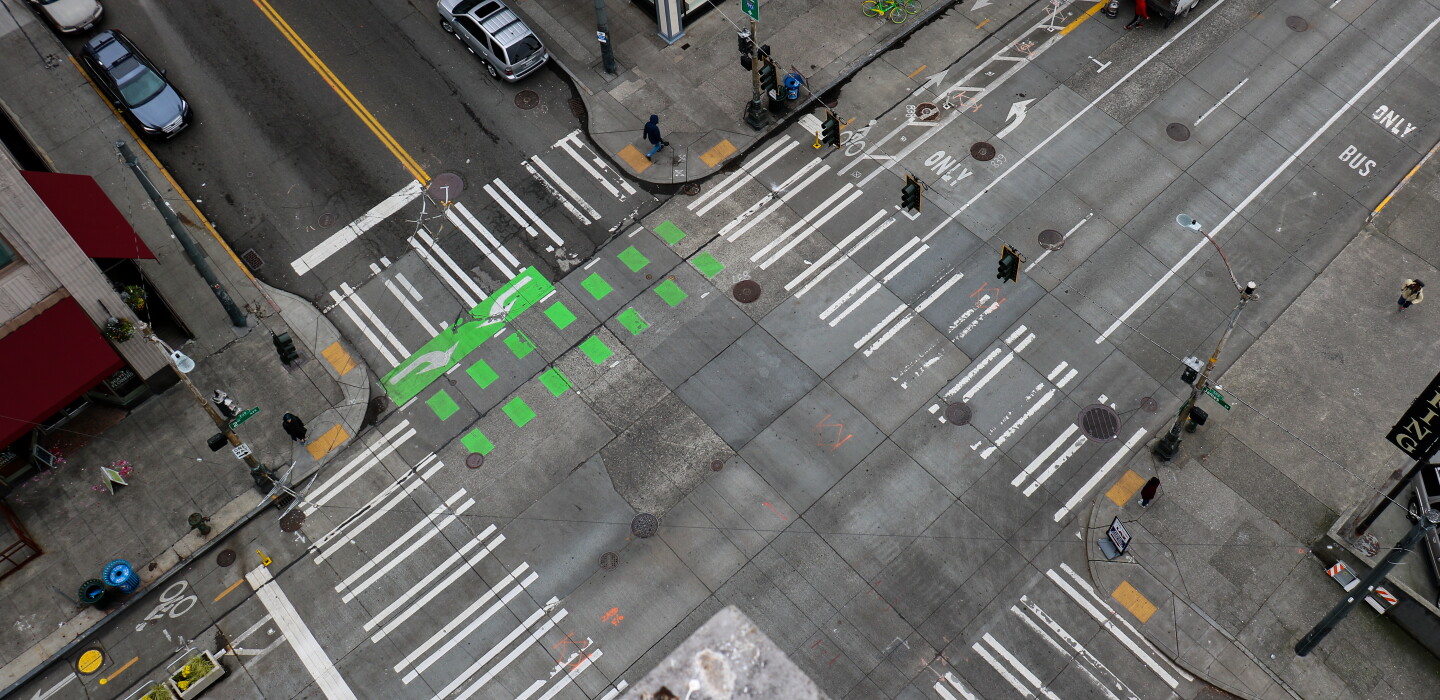
Two transportation agencies — Georgia DOT and the City of Raleigh — are deploying AI tools that turn decades of dormant data into operational intelligence.
Georgia DOT partnered with Beacon AI to unlock insights buried across more than 10 million documents and 20 terabytes of agency data. Engineers can now query historical project records — roundabout geometry, proximity to rail crossings, past design decisions — in seconds instead of hours. GDOT Deputy Commissioner Andrew Heath confirmed the technology accelerated project startup timelines almost immediately after deployment.
The productivity case is straightforward: most transportation projects build on prior work, and Beacon CEO Jim Anderson says compressing research time gets engineers back to engineering. GDOT is now scaling Beacon across its entire document enterprise and expanding beyond the initial roundabout pilot to additional project types.
In Raleigh, the city's AI deployment runs in a different direction — out onto the street. Using Nvidia-powered computer vision at six intersections, Raleigh CIO Mark Wittenburg's team now tracks vehicle lanes, turning movements, pedestrian and cyclist behavior, stalled vehicles, and road debris. Critically, the system analyzes near misses, not just reported accidents, giving transportation officials a fuller picture of where the mobility system is quietly failing before someone gets hurt.
Why it matters: DOT agencies sitting on years of unstructured project data or aging camera infrastructure have a clear proof-of-concept here — AI can convert both into faster project delivery and measurable safety gains without rebuilding systems from scratch.
Source: Department of Transportation
FMCSA's AI-driven CDL School Purge Collapses as Shuttered Schools Win Reinstatement

The Federal Motor Carrier Safety Administration is losing its high-profile crackdown on 110 CDL training schools, with multiple schools already reinstated after the agency could not defend its own shutdown orders.
FMCSA shut down the schools in August under "Joint Task Force Crossroads of America," a White House-directed anti-fraud initiative involving DOT and DHS. The agency used AI to trace English Language Proficiency roadside violations back to the schools where cited drivers trained. The problem: no federal regulation requires Entry Level Driver Training to be conducted in English — a fact FMCSA acknowledged in its own shutdown letters.
Roadside ELP violations are also allegations, not adjudicated citations. Schools that passed FMCSA audits as recently as July landed on the shutdown list anyway. In at least one case, FMCSA attributed ELP violations to the wrong school entirely. One Miami school owner beat the shutdown by filing an AI-drafted administrative appeal — FMCSA failed to produce new evidence within the 10-day response window and reinstated him.
At least six schools have won reinstatement. Twenty have contested the shutdowns. A New Jersey school, Start CDL, filed suit and triggered a federal show-cause order requiring FMCSA to justify its jurisdiction. The White House and FMCSA have not commented publicly.
Why it matters: When federal agencies use AI to drive enforcement without validating the underlying legal authority, vendors and DOT technology teams should treat this as a live case study in AI-assisted decision-making gone wrong — and a warning about deploying automated systems against regulated entities without airtight statutory backing.
Source: Department of Transportation (via Overdrive)
Quarterhill Lands $28.2M Subcontract to Modernize LA Metro's ExpressLanes Back Office

Quarterhill secured a $28.2 million subcontract to overhaul the back-office system powering LA Metro's ExpressLanes tolling operations across four major Los Angeles freeways.
Quarterhill joins prime contractor BRiC-TPS, LLC to modernize Metro's ExpressLanes Back Office System (BOS) covering I-10, I-110, I-105, and future corridors. The contract runs an 8-year base term with two 3-year options — up to 14 years total. Quarterhill handles project management, security compliance, customer service center staffing, and communication system integration throughout implementation and ongoing operations.
The scope covers the full tolling ecosystem: customer account management, transaction processing, financial reporting, and system integrations. LA Metro serves nearly 10 million residents in Los Angeles County, making this one of the largest managed lane back-office modernization programs in the country. Quarterhill also recently announced work with Caltrans, deepening its California footprint.
In 2026 alone, Quarterhill has won contracts across Illinois, Indiana, California, New Jersey, and Massachusetts — signaling aggressive national expansion in the tolling and ITS modernization space.
Why it matters: DOT agencies modernizing tolling infrastructure are increasingly turning to long-term operational partners, not just technology vendors — and contracts like this show what a 14-year managed services model looks like at scale.
Source: Department of Transportation
Michigan Drops $4M on Autonomous Transit Study in Saginaw's Medical Corridor

Michigan's MDOT awarded Saginaw Transit Authority Regional Services four grants totaling $4 million to pilot autonomous vehicle technology, expand airport connectivity, and launch new regional veteran transit services.
STARS will use the funding to study semi-autonomous bus deployment along Saginaw's medical diamond corridor — a fixed-route environment that transit officials say suits current autonomous systems well. Semi-autonomous vehicles still require a human driver but automate significant portions of the route. STARS will benchmark pilot programs already running in other Michigan communities before committing to a local rollout.
Two of the four grants target MBS International Airport, funding both new route service connecting the airport to Saginaw Valley State University and Delta College, and a regional ground transportation planning study. A fourth grant funds veteran-specific transit services through a partnership with three neighboring transit authorities. STARS plans to announce service launch dates in early 2027, with planning studies beginning the same year.
The $4 million represents more than a third of STARS's $11.5 million annual operating budget — a signal that state DOTs are actively funding autonomous transit feasibility work at mid-sized regional agencies, creating concrete evaluation and integration opportunities for transit technology vendors.
Source: MLive.com / Michigan Department of Transportation
DOT Pushes Back on Reporting That Shuttered CDL Schools Are Slipping Back Onto Federal Registry

The U.S. Department of Transportation fired back at industry outlet Overdrive this week, calling its investigation into reinstated CDL schools "factually baseless" — while declining to deny that several of the 110 emergency-shuttered schools have since returned to the Training Provider Registry.
FMCSA shut down the schools after data showed graduates collectively racked up over 5,000 English Language Proficiency violations since June 2025, with some drivers linked to fatal crashes. DOT's core rebuttal targeted one specific claim: that the task force used AI to identify noncompliant schools. "No AI was used to identify the training providers that were issued the emergency removal," a DOT spokesperson said flatly.
Overdrive's reporting, backed by data from sister company RigDig, found 38,189 ELP violations logged from July 2025 through September 2026. The outlet also reported that shut-down schools could rejoin the TPR through self-certification alone, and that providers advertising two-hour theory courses stayed operational. DOT did not directly refute either claim.
The broader cleanup is substantial — FMCSA has removed nearly 10,000 training locations from the TPR since January 2025 — but reinstatements and enforcement gaps signal that the registry's data integrity remains an open problem for any agency or vendor relying on it.
Source: Department of Transportation
Sponsored by Sourcetoad: Custom software and AI solutions for the AEC Industry.
Add a comment: