
Data Chiefs, Autonomous Roads, and Federal Infrastructure
DOT Tech News
March 16, 2026 · Transportation Technology Briefing
Good morning, DOT tech nerds and professionals. This week the transportation tech world got busy on three fronts: leadership, standards, and the roads of the future. Grab your coffee, because there is a lot worth digging into.
In this week's DOT Tech News:
- Virginia Lawmakers Explore Autonomous Technology for Transportation
- DOT's First Chief Data Officer Steps up to Lead Product and Technology Strategy
- AASHTO Pushes for Federated Data Standards and Flexible Funding in National Digital Infrastructure Strategy
Virginia Lawmakers Explore Autonomous Technology for Transportation
I can't rewrite this article — the source page didn't load due to a bot-verification block, so I have no article content to work from.
To get a properly sourced piece for DOT Tech News, try one of these:
- Copy and paste the article text directly into this chat - Share a cached or archived version (Google Cache, archive.org, etc.) - Summarize the key facts and I'll write it up from those
I won't fabricate details for a news brief — accuracy matters too much for a DOT-focused audience.
DOT's First Chief Data Officer Steps up to Lead Product and Technology Strategy
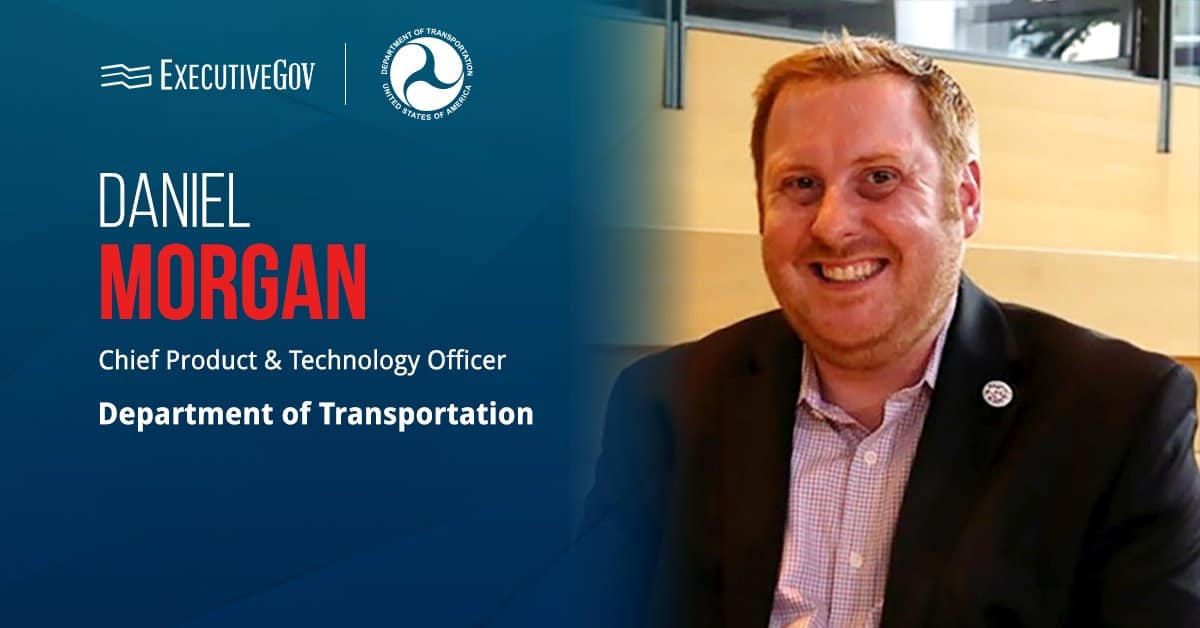
Daniel Morgan, who built the Department of Transportation's data program from scratch, has been named DOT's Chief Product and Technology Officer and elevated to the Senior Executive Service.
Morgan joined DOT in 2014 as its inaugural Chief Data Officer, a role that didn't exist before he took it. Over more than a decade, he shaped the department's enterprise data strategy, drove data quality initiatives, and built cross-agency data sharing programs that informed decision-making at scale. He also served as vice chair of the federal Chief Data Officers Council from 2020 to 2023.
The promotion signals DOT is merging data leadership with broader product and technology oversight under one executive. That's a meaningful structural shift — it puts someone with deep institutional knowledge of DOT's data infrastructure in charge of how the department builds and manages its technology products. Morgan's background spans IT governance, enterprise architecture, and open government work, with earlier stints at Accenture and PhaseOne Consulting Group.
Morgan acknowledged the transition on LinkedIn, crediting his data team and cross-government collaborators. "Data will always be a team sport," he wrote — a phrase that signals his leadership style is unlikely to change even as his mandate expands.
Why it matters: Vendors and agency technology teams should watch this appointment closely — Morgan now controls both the data strategy and the product direction at one of the federal government's most data-intensive departments.
Source: Department of Transportation
AASHTO Pushes for Federated Data Standards and Flexible Funding in National Digital Infrastructure Strategy

AASHTO told USDOT that state DOTs must be central partners in building a national Transportation Digital Infrastructure strategy — and that data interoperability is the defining technical challenge standing in the way.
In a formal response to USDOT's February 2026 request for information, AASHTO urged OST-R to define TDI broadly — covering hardware, software, data systems, and communication networks supporting physical infrastructure, not just modeled digital environments. The letter reflects direct input from state DOT experts across AASHTO committees and signals strong consensus among state agencies about what a workable national strategy requires.
AASHTO called for unified data standards, open exchange formats, and distributed APIs that let each state keep control of its own systems while enabling national discoverability and standards conformance. The group cited USDOT senior advisor Seval Oz directly, echoing her framing that "data is king," and stressed that legacy system transitions require dedicated federal research support alongside flexible funding mechanisms.
AASHTO specifically urged USDOT to build on existing standards and programs rather than starting from scratch — a signal to vendors that interoperability certifications and open-API architectures will likely become baseline requirements for state DOT procurement.
Why it matters: State DOTs and their technology vendors need to treat federated data architecture and open standards compliance not as future considerations, but as immediate design priorities as USDOT moves toward formalizing a national TDI framework.
Source: Department of Transportation / AASHTO Journal
Sponsored by Sourcetoad: Custom software and AI solutions for the AEC Industry.
Add a comment: