
FAA's AI Bet and the Road to Safer Streets
DOT Tech News
September 28, 2026 · Transportation Technology Briefing
Good morning, DOT tech nerds and professionals. This week, AI moves from the whiteboard to the runway as the FAA rolls out its SMART system at DC-area airports and backs it with a $12.5 billion modernization push. We also look at how DOT is rethinking road safety for 2026 and what role autonomous vehicles play in that plan.
In this week's DOT Tech News:
- FAA Tests AI Tool to Assist Air Traffic Controllers
- FAA's AI-Powered SMART System Targets Flight Delays With $12.5 Billion Infrastructure Overhaul
- FAA Deploys AI Traffic Tool Across DC's Three Major Airports in First Step Toward National Rollout
- DOT Launches AI Flight-delay Tool at Three DC-area Airports, Eyes National Rollout by 2028
- FAA Launches AI-Powered SMART Tool in DC Airports to Cut Flight Delays
- DOT Launches AI Air Traffic System Backed by $12.5 Billion Modernization Push
- DOT Launches AI-powered SMART System to Overhaul Air Traffic Control by 2028
- DOT's 2026 National Roadway Safety Strategy Bets on AVs and Law Enforcement to Cut Traffic Deaths
FAA Tests AI Tool to Assist Air Traffic Controllers

The U.S. Department of Transportation is piloting an AI-powered tool designed to support air traffic controllers, marking one of the federal government's most operationally sensitive deployments of artificial intelligence to date.
The FAA manages over 45,000 flights daily, and controller staffing shortages have pushed the agency to explore technology-assisted solutions. An AI tool that can assist with routing, communication support, or workload management could meaningfully reduce errors and delays — two metrics Congress and DOT leadership have flagged as top priorities.
This kind of pilot reflects a broader DOT posture: test AI in high-stakes operational environments before committing to full deployment. Agencies across the department are watching closely, as a successful FAA rollout could accelerate AI adoption in adjacent areas like freight logistics, transit operations, and highway management.
For software vendors and consultancies targeting the DOT market, this signals real appetite for AI tools that meet federal safety and compliance standards — not just commercial-grade products repurposed for government use. Procurement opportunities will likely follow demonstrated results from this pilot.
Why it matters: DOT agencies evaluating AI for operations now have a high-profile internal benchmark to reference — and vendors who build to FAA-grade reliability standards will be best positioned when RFPs follow.
Source: Department of Transportation
FAA's AI-Powered SMART System Targets Flight Delays With $12.5 Billion Infrastructure Overhaul

The FAA launched its AI-enhanced Strategic Management of Airspace Routes and Trajectories (SMART) system Monday, backed by $12.5 billion in congressional funding to replace decades of crumbling air traffic control infrastructure.
The stakes are high. A 2024 Government Accountability Office risk assessment found 76% of the FAA's 138 air traffic control systems rated either "unsustainable" or "potentially unsustainable." SMART replaces static route charts with real-time monitoring of weather, flight paths, and arrival and departure schedules — giving controllers predictive data instead of reactive information.
DOT Secretary Sean Duffy was direct about the system's role: SMART delivers predictive tools to human controllers, not autonomous decision-making. FAA Administrator Bryan Bedford says the system frees controllers to focus on safety and traffic separation rather than manual data management. The FAA begins rollout immediately at DCA, BWI, and Dulles airports in the D.C. region.
Travelers should expect gradual improvement by summer 2027. Full national deployment — including upgraded telecommunications lines, new radios and radars, and electronic flight strips — targets completion by end of 2028.
Why it matters: DOT agencies and their technology vendors should watch this rollout closely — SMART represents the federal government's largest and most explicit bet yet on AI-assisted infrastructure modernization, setting expectations for how predictive tools get integrated across other modal administrations.
Source: Department of Transportation
FAA Deploys AI Traffic Tool Across DC's Three Major Airports in First Step Toward National Rollout
The FAA launched SMART, an AI-powered airspace management system, at Reagan National, Dulles, and BWI — kicking off a 12-year, $875 million modernization push.
Boston-based Air Space Intelligence built SMART to pull from more than 200 live data streams, giving air traffic analysts a real-time picture of flight statuses, departure queues, and potential congestion before problems develop. Color-coded visual cues flag wait times for departing aircraft, and predictive weather modeling helps controllers optimize routes and speeds on the fly. Human controllers remain fully in charge — the system augments their decisions, it doesn't make them.
Transportation Secretary Sean Duffy and FAA Administrator Bryan Bedford both emphasized that SMART targets traffic analysts, not the controllers responsible for collision prevention. That distinction matters: the tool sits in the strategic layer of airspace management, not the tactical one. Think of it as a smarter briefing tool for the people planning traffic flows, not a co-pilot for the people separating planes.
The FAA chose the DC region because its overlapping flight corridors and frequent weather disruptions make it one of the hardest airspace puzzles in the country. A successful test here clears the path for a nationwide rollout by 2028, alongside parallel upgrades to FAA telecommunications infrastructure and surface awareness systems.
Why it matters: Agencies and vendors working on FAA modernization contracts should watch SMART's DC performance closely — its expansion timeline and multi-stream data architecture will likely shape procurement and integration standards for air traffic tech through the end of the decade.
Source: Department of Transportation
DOT Launches AI Flight-delay Tool at Three DC-area Airports, Eyes National Rollout by 2028

The Department of Transportation has deployed SMART — Strategic Management of Airspace Routes and Trajectories — at Reagan National, Dulles International, and BWI, marking the first real-world use of the AI airspace management tool anywhere in the world.
DOT Secretary Sean Duffy described SMART as a predictive system that feeds real-time weather, congestion, and flight path data to human air traffic controllers — not a replacement for them. The FAA awarded an $875 million contract to a Boston-based software firm to develop the tool. If the DC-area pilot succeeds, DOT plans a national rollout by 2028.
FAA Administrator Bryan Bedford pointed to Reagan National as a prime target for efficiency gains, arguing that the airport's reputation as "full" masks significant untapped capacity. The agency believes better aligning demand to available airspace slots could meaningfully cut delays at one of the country's most constrained airports.
The rollout faces immediate headwinds. Virginia Rep. Don Beyer called for a suspension of the program, citing safety concerns and claiming air traffic controllers were neither consulted during development nor trained before deployment. The National Air Traffic Controllers Association echoed that concern, insisting any new technology must complement — not sideline — controller expertise.
Why it matters: DOT agencies and their software vendors should watch this pilot closely — an $875 million AI procurement moving from contract to live deployment at major airports sets a precedent for how DOT evaluates, tests, and scales safety-critical AI systems across all transportation modes.
Source: NBC Washington / Department of Transportation
FAA Launches AI-Powered SMART Tool in DC Airports to Cut Flight Delays

The FAA has begun a 90-day pilot of its new Strategic Management of Airspace, Routes and Trajectories (SMART) system at DC-area airports, with a nationwide rollout planned over the coming months.
SMART replaces a patchwork of static datasets and paper flight charts with a unified platform pulling 200 real-time data streams. The system uses AI to predict weather disruptions and project precise landing times, giving air traffic managers the foresight to proactively reroute flights before bottlenecks form. Transportation Secretary Sean Duffy and FAA Administrator Bryan Bedford both emphasized that humans retain all decision-making authority — SMART functions as an advisory tool, not an autonomous controller.
Boston-based Air Space Intelligence developed the system under an $875 million, 12-year contract covering SMART and a companion platform. Funding flows from the $12.5 billion aviation infrastructure overhaul included in the One Big Beautiful Bill Act. The contract signals a significant shift in how the federal government intends to modernize legacy air traffic management infrastructure.
SMART is not an air traffic control system and carries no direct safety certification — Bedford called it an "advisory" tool focused on big-picture traffic flow, not collision avoidance. Expected benefits include reduced fuel burn, lower carbon emissions, and fewer costly flight delays.
Why it matters: DOT agencies and their technology vendors should watch SMART closely — it represents the federal government's clearest signal yet that AI-powered decision-support tools, not AI decision-makers, are the preferred model for modernizing critical transportation infrastructure.
Source: Department of Transportation
DOT Launches AI Air Traffic System Backed by $12.5 Billion Modernization Push

The Department of Transportation unveiled the SMART system Monday — an AI-enhanced air traffic control platform designed to cut flight delays by replacing static route charts with real-time weather, flight path, and scheduling data.
The Strategic Management of Airspace Routes and Trajectories system gives controllers predictive tools to resolve problems before they trigger ground stops or diversions. DOT Secretary Sean Duffy was direct: this is not AI replacing controllers, but AI making controllers faster and better informed. The FAA will begin rollout immediately at DCA, BWI, and Dulles.
The urgency behind this launch is hard to overstate. A 2024 GAO risk assessment of all 138 FAA air traffic control systems found 37% rated "unsustainable" and another 39% rated "potentially unsustainable." For decades, the FAA only received enough funding to maintain aging infrastructure, not replace it. Congress broke that cycle through the "One Big Beautiful Bill," which funds this $12.5 billion effort.
Full national deployment runs through end of 2028 and includes upgraded telecom lines, new radios and radars, and a shift to electronic flight strips. Travelers should expect gradual improvement by summer 2027, Duffy said.
Why it matters: Vendors building scheduling, communications, or operations software for aviation and surface transportation should watch SMART closely — the FAA's move toward real-time, AI-assisted decision tools signals where federal transportation technology investment is heading across all modes.
Source: The Center Square / Department of Transportation
DOT Launches AI-powered SMART System to Overhaul Air Traffic Control by 2028
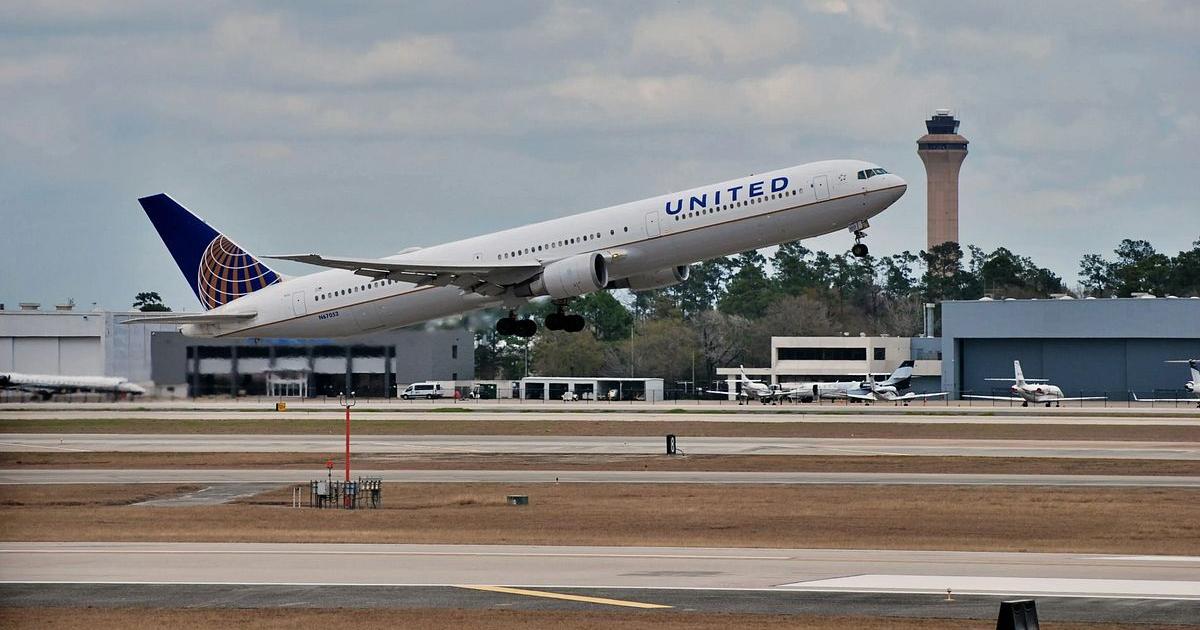
The Department of Transportation launched its AI-enhanced Strategic Management of Airspace Routes and Trajectories (SMART) system Monday, backed by $12.5 billion in federal funding to replace air traffic control infrastructure the GAO flagged as largely unsustainable.
The urgency is real. A 2024 GAO risk assessment of the FAA's 138 air traffic control systems found 37% "unsustainable" and another 39% "potentially unsustainable." For decades, the FAA had funding only to maintain aging systems, not replace them. The new investment — sourced from the "One Big Beautiful Bill" — changes that calculus and gives the FAA a modernization runway it has not had before.
SMART replaces static flight charts with real-time monitoring of weather, flight paths, and arrival and departure schedules. DOT Secretary Sean Duffy described the system as predictive tooling for human controllers, not AI autonomy — designed to prevent ground stops and diversions before they happen. FAA Administrator Bryan Bedford said the system frees controllers to focus on safety and traffic separation rather than managing outdated information.
The FAA begins rollout immediately at DCA, BWI, and Dulles airports. Travelers can expect gradual improvements by summer 2027, with full national deployment — including new radios, radars, telecom upgrades, and electronic flight strips — completed by end of 2028.
Why it matters: Agencies and vendors building aviation-adjacent software, data pipelines, or operations tools should treat 2025–2028 as a procurement window — the FAA will need integration partners as it transitions from legacy infrastructure to a real-time, AI-assisted airspace management environment.
Source: Department of Transportation via The Center Square
DOT's 2026 National Roadway Safety Strategy Bets on AVs and Law Enforcement to Cut Traffic Deaths

The U.S. Department of Transportation released its 2026 National Roadway Safety Strategy in August, replacing the 2022 plan with a sharper focus on autonomous vehicles, rural and tribal communities, and law enforcement as a core safety pillar.
Traffic deaths dropped to 36,640 in 2025 — the lowest total since 2019 — down from 39,254 the year before. The new NRSS builds on that momentum with three pillars: safer people, safer roads, and safer vehicles. The plan calls for a formal national AV strategy, a significant signal for vendors developing autonomous and connected vehicle technologies targeting federal and state DOT contracts.
The "safer roads" pillar pushes innovative design to reduce bottlenecks and congestion, but critics argue the plan pulls back from proven pedestrian and cyclist protections. The Federal Highway Administration recently removed five evidence-backed safety countermeasures from its website — including bicycle lanes, road diets, and speed safety cameras. Local transportation agencies say they will continue using those design standards regardless of the federal website changes.
The plan's emphasis on rural and tribal communities stands out, even though NHTSA data shows urban areas recorded more total fatalities between 2016 and 2024. State DOTs and tribal transportation programs should expect renewed federal attention — and potential funding alignment — around rural corridor safety upgrades.
Why it matters: DOT agencies evaluating road safety investments and vendors building AV, traffic management, or design tools now have a clearer picture of where federal priorities — and federal dollars — are heading.
Source: Department of Transportation / Smart Cities Dive
Sponsored by Sourcetoad: Custom software and AI solutions for the AEC Industry.
Add a comment: