
FAA's AI Moment: Assist, Don't Replace
DOT Tech News
April 27, 2026 · Transportation Technology Briefing
Good morning, DOT tech nerds and professionals. The FAA is having a big week, and honestly, so is the whole question of what AI should actually do in high-stakes transportation systems. This edition is heavy on air traffic management, but there are lessons here for anyone buying, building, or governing software across DOT agencies.
In this week's DOT Tech News:
- Duffy Draws a Hard Line — AI Assists Air Traffic Controllers, It Doesn't Replace Them
- FAA's $12.5B Infrastructure Overhaul Replaces Floppy Disks and Copper Wire — but the Software Bill Is Still Coming
- FAA Builds AI Digital Twins of the National Airspace System to Cut Flight Delays and Fuel Costs
- Caltrans AI Chief Warns Against Chasing Shiny Objects as State CIOs Share Operationalization Lessons
- FAA Taps Palantir, Thales, and Air Space Intelligence to Compete for $12B AI Air Traffic Management Contract
Duffy Draws a Hard Line — AI Assists Air Traffic Controllers, It Doesn't Replace Them

Transportation Secretary Sean Duffy told CBS News on Tuesday that AI will never hold final authority over U.S. airspace, pushing back against fears that the DOT's $12.5 billion modernization effort signals a move toward automated air traffic management.
The current modernization phase replaces aging copper wire with fiber optics, upgrades radar and radio systems, and builds new control centers. Duffy now wants a second phase — an AI-powered scheduling tool that identifies airspace bottlenecks up to 45 days out and nudges flight times by minutes to prevent delays before they cascade. That second phase could carry a price tag of up to $10 billion and requires Congressional approval.
Duffy framed AI strictly as a decision-support tool, not a decision-maker. "The final say, in anything we do, is going to be an air traffic controller," he told CBS. He argued the technology would reduce cognitive load on controllers — one of the most stressful workforces in the country — freeing them to focus on emergencies rather than juggling routine traffic management.
Why it matters: DOT agencies and their software vendors should read this as a clear procurement signal — FAA will fund AI tools that augment controller performance and reduce near-misses, but any system that positions itself as replacing human judgment will face a firm institutional wall.
Source: The Hill
FAA's $12.5B Infrastructure Overhaul Replaces Floppy Disks and Copper Wire — but the Software Bill Is Still Coming

Congress handed the FAA $12.5 billion to modernize air traffic control, and the agency is spending it fast — but Transportation Secretary Sean Duffy says additional funding for software and AI integration is still needed to finish the job.
The spending, part of President Trump's budget bill, has already delivered results: nearly half of the system's copper wiring replaced with fiber, 270 radio sites converted, 17 towers running electronic flight strips, and 4,500 FAA sites receiving new radars, digital voice switches, and training simulators. Contractor Peraton is driving the physical infrastructure work across four focus areas: wiring, communications, radars, and electronic strips.
The hardware progress comes after high-profile incidents exposed systemic weaknesses — including the 2024 Reagan National collision that killed 67 people, where NTSB cited controller overload as a factor. Duffy told reporters the next phase requires separate funding for software development, deployment, debugging, and workforce training — costs Congress did not fully address in the current bill.
Why it matters: DOT agencies and their technology vendors should watch this closely — the FAA's software and AI procurement wave is coming, and the contracts that follow will define air traffic management for the next generation.
Source: Department of Transportation
FAA Builds AI Digital Twins of the National Airspace System to Cut Flight Delays and Fuel Costs

The FAA revealed at its Modern Skies Summit that vendors have successfully built AI-powered digital twins of the entire National Airspace System, trained on 20-plus years of flight data to predict, optimize, and deconflict future air traffic schedules.
FAA Administrator Bryan Bedford called this the "third wave of true modernization." The digital twins use predictive analytics to shrink block times and reduce fuel burn — outcomes Bedford says will lower costs for airlines and passengers alike. The FAA now wants to build custom AI software to automate scheduling and traffic flow, plus a centralized training and safety platform. The catch: nothing like it exists commercially today.
The FAA is working with 52 vendors on the broader ATC overhaul, with Peraton serving as prime integrator. Peraton is already deploying agentic AI tools to manage the program at scale. The broader modernization effort has also replaced nearly 50% of copper wiring, converted 270 radio sites, and moved 17 towers to electronic flight strips — all since the overhaul launched last year.
Funding remains the biggest obstacle. The FAA received $12.5 billion from Congress for initial ATC modernization, but is pushing for an additional $20 billion. The White House's FY2027 budget proposes only $4 billion more. Secretary Duffy admitted the agency is currently raiding the metaphorical couch cushions to fund early vendor engagement.
Why it matters: DOT agencies are actively seeking vendor partners to build mission-specific AI tools that the commercial market doesn't yet offer — a significant opportunity for software firms that can demonstrate deep domain expertise and move fast.
Source: Department of Transportation
Caltrans AI Chief Warns Against Chasing Shiny Objects as State CIOs Share Operationalization Lessons

California's top transportation and public sector technology leaders laid out a hard-won playbook for moving AI from pilot to production at last week's California Public Sector CIO Academy in Sacramento.
Caltrans Chief Data and AI Officer Vidhu Shekhar told attendees that his agency's AI vision centers on empowering all 23,000 employees to use the technology in their daily work — but getting there starts with a deceptively simple question: what do workers actually do today, and where do service challenges exist? Shekhar pushed back against tech enthusiasm for its own sake, warning leaders not to get "enamored by the shiny object in the room."
Thomas Boon, who leads enterprise information services at the California Department of Corrections and Rehabilitation, defined operationalized AI bluntly: a real product turned managed service, complete with SLAs, performance metrics, and security controls. His agency ran six proofs of concept and called two of them failures — deliberately. "Those POCs were effective because we knew what we didn't want," he said. CalPERS CIO Stephenson Loveson added that organizations must define what AI means to them before scaling it, landing on "human-enabled AI" where users own every output.
Why it matters: DOT agencies and their vendors face the same pressure to show AI results fast — these state leaders offer a replicable framework: start small, let pilots fail, anchor everything to workforce outcomes, and build governance before you build scale.
Source: Department of Transportation
FAA Taps Palantir, Thales, and Air Space Intelligence to Compete for $12B AI Air Traffic Management Contract
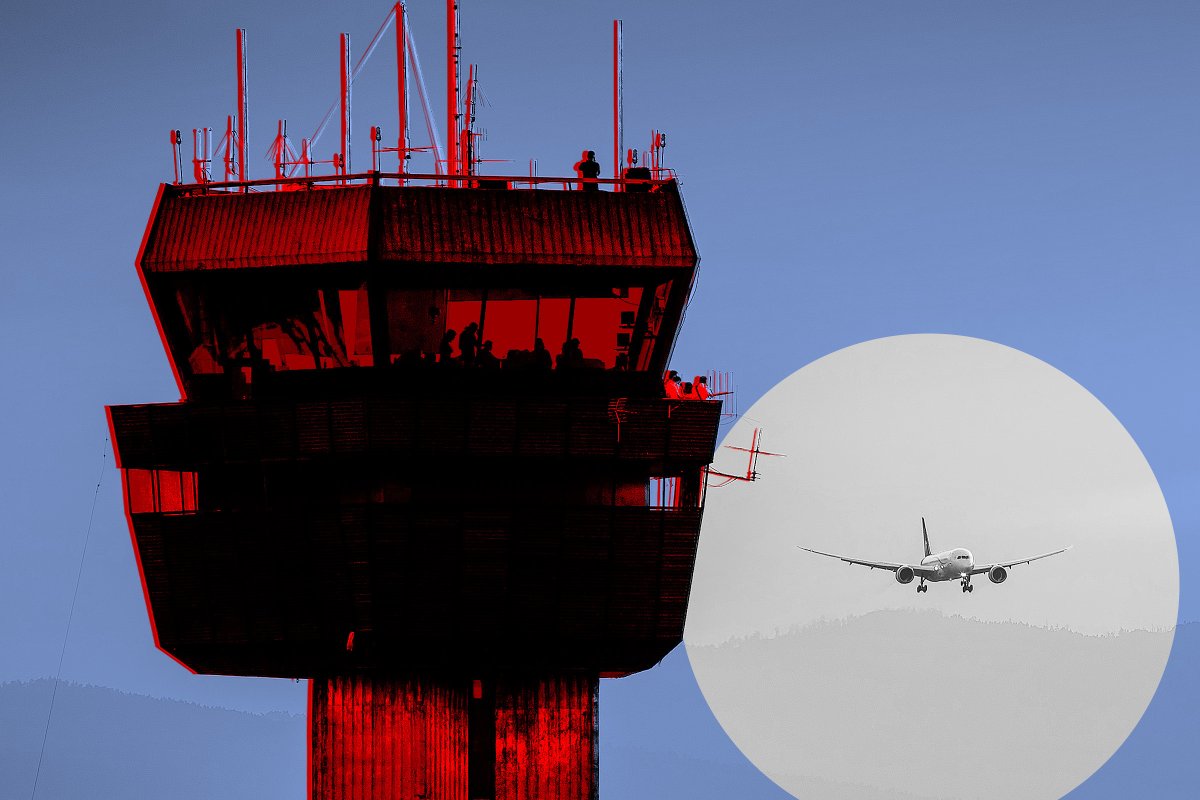
The FAA is running a three-way competition for SMART, a $12 billion AI-powered air traffic management platform that Transportation Secretary Sean Duffy says will schedule flights up to 45 days in advance to reduce delays.
Duffy confirmed the initiative at a Semafor event and later with CBS News, describing a system that predicts congestion weeks out and nudges flight times by minutes to smooth traffic flow. The FAA brought on Palantir, Thales SA, and Air Space Intelligence to compete for the contract. Palantir confirmed its role publicly, stating it was contracted to "provide a data analytics tool that will help advance the agency's modernization objectives for aviation safety."
Duffy drew a clear line: SMART will assist controllers, not replace them. The system targets scheduling optimization, not real-time airspace control. Still, the $12 billion price tag and compressed federal timeline raise execution questions. AI scheduling tools have struggled in lower-stakes environments, and air traffic management leaves almost no margin for error.
Why it matters: DOT agencies and their software vendors should watch this procurement closely — a $12 billion FAA contract with three named competitors signals serious federal appetite for AI-assisted operations tools, and the SMART framework could become a template for AI integration across other modal administrations.
Source: Department of Transportation / Bloomberg / CBS News
Sponsored by Sourcetoad: Custom software and AI solutions for the AEC Industry.
Add a comment: