Funding Wins, Waymo Fails, and AI Modernization Advice
DOT Tech News
May 18, 2026 · Transportation Technology Briefing
Good morning, DOT tech nerds and professionals. This week we have a mix of good news and cautionary tales. From a promising funding bill on the Hill to a software flaw that drove autonomous vehicles into floodwater, there is a lot to dig into.
In this week's DOT Tech News:
- Bipartisan House Bill Would Fund DOT Tech and Research Through 2031
- Portland's "Rest in Red" Signal Tech Shows Early Wins Against Nighttime Speeding
- DOT Warning Flags Waymo Software Flaw That Drove Vehicles Into Floodwater
- DOT's AI Advisor Backs Lift-and-Shift as the Fastest Lane to Legacy Modernization
Bipartisan House Bill Would Fund DOT Tech and Research Through 2031
Congressman Vince Fong (R-CA) introduced the Surface Transportation Research and Development Act, a bipartisan bill that would lock in federal DOT research and technology funding through fiscal year 2031.
The bill, co-led by Rep. Emilia Sykes (D-OH), targets three core areas: how DOT collects and coordinates transportation data, university research partnerships, and emerging technologies tied to infrastructure resilience. It covers programs ranging from highway innovation and railway modernization to studies on vehicle headlamp glare and next-generation asphalt materials.
H.R.8748 now sits before the House Committees on Science, Space and Technology and Transportation and Infrastructure. The multi-year funding window gives agencies and vendors a longer planning horizon than typical annual appropriations cycles allow.
Why it matters: A six-year federal commitment to DOT research signals sustained demand for data systems, emerging tech pilots, and infrastructure innovation tools — a direct opportunity for agencies planning tech roadmaps and vendors building for the transportation market.
Source: Department of Transportation (via KGET 17 / Nexstar Media)
Portland's "Rest in Red" Signal Tech Shows Early Wins Against Nighttime Speeding

Portland's Bureau of Transportation is expanding a wave-detection signal system that keeps traffic lights red longer to catch and slow speeding drivers on the city's most dangerous corridors at night.
The "Rest in Red" pilot launched two years ago on SE Powell Boulevard, one of Portland's highest-crash streets. The system runs from 10 p.m. to 6 a.m. on weekdays and holds signals red until approaching vehicles slow to the speed limit. A 2025 preliminary evaluation at SE Powell and 28th Avenue showed measurable reductions in nighttime speeding — a strong enough signal to greenlight a full study.
Oregon State University researchers will conduct a comprehensive evaluation and publish recommendations in 2026, partnering with PBOT on the analysis. Meanwhile, PBOT is targeting SE 82nd Avenue for expansion as part of the "Building a Better 82nd" corridor modernization project, which is already upgrading traffic signal infrastructure along that stretch.
The active deployments currently cover SE Powell Boulevard at 21st, 26th, 28th, and 33rd avenues, plus NE Lloyd Boulevard at 7th Avenue.
Why it matters: Agencies and vendors developing adaptive signal control or vision-zero technology should watch this Oregon State partnership closely — a peer-reviewed 2026 evaluation could shape procurement decisions and grant applications at DOT agencies nationwide.
Source: Portland Bureau of Transportation
DOT Warning Flags Waymo Software Flaw That Drove Vehicles Into Floodwater
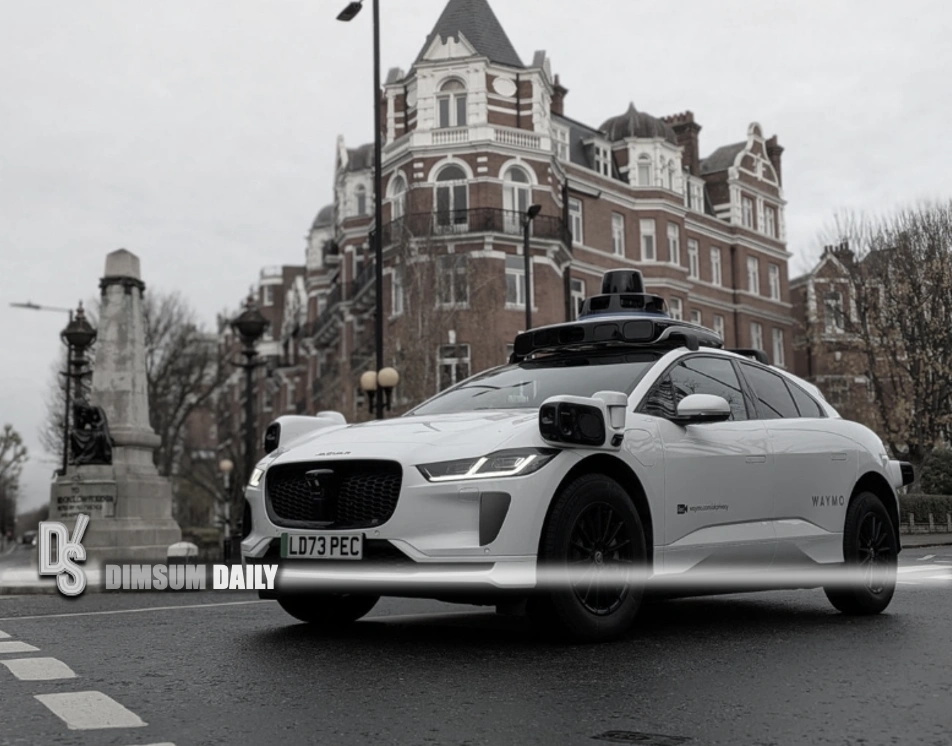
A DOT safety notice confirmed that Waymo's autonomous vehicle software "may allow the vehicle to slow and then drive into standing water on higher-speed roadways," triggering a recall of nearly 3,800 vehicles after a San Antonio robotaxi entered floodwater and was recovered downstream.
The recall followed remarks by Autobrains CEO Igal Raichelgauz at the Financial Times Future of the Car conference, where he identified "common sense" as the biggest gap in autonomous driving AI today. The failure mode is a known structural weakness in machine-learning-based autonomy stacks — these systems excel at high-frequency scenarios but break down at rare, out-of-distribution events like unexpected flooding or unusual road geometry.
For engineers and procurement teams, DOT recall filings are the most actionable intelligence available. These notices name exact boundary conditions where perception or decision systems misclassify hazards — making them essential reading for any agency evaluating AV deployments or vendors building autonomy tools for public-road environments.
Waymo continues expanding internationally, currently running London trials with Jaguar Land Rover vehicles and human safety drivers aboard.
Why it matters: DOT agencies evaluating autonomous vehicle pilots or procurement need to treat federal safety notices as live technical documents — not just compliance paperwork — because they define exactly where today's AV systems will fail on public roads.
Source: Department of Transportation / DimSumDaily / The Times
DOT's AI Advisor Backs Lift-and-Shift as the Fastest Lane to Legacy Modernization
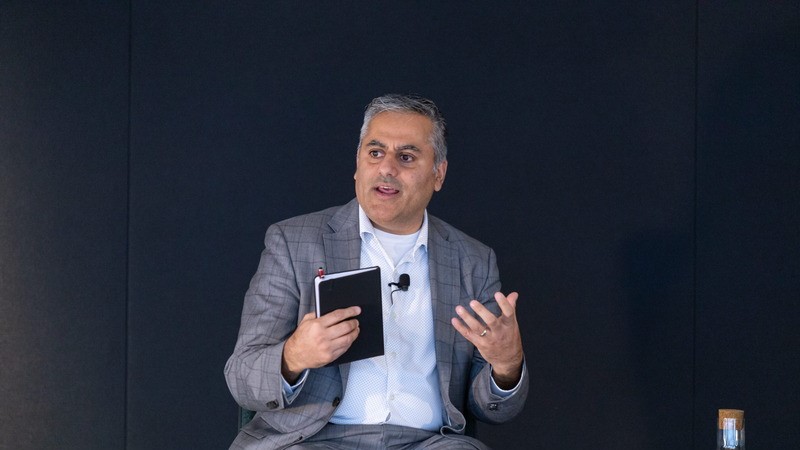
A senior DOT technology advisor is telling federal agencies to stop overthinking modernization and start moving legacy systems into modern infrastructure now, applications intact.
Anil "Neil" Chaudhry, DOT's senior AI advisor, made the case at the Red Hat Government Symposium that lift-and-shift migration — pulling a legacy application straight from a mainframe into a hyperscale cloud environment — gives agencies the fastest path to eliminating technical debt without triggering downtime. Once stabilized in the new environment, teams can modernize code and services incrementally, on their own timeline.
The strategy addresses a real tension inside federal IT shops: technical teams juggle security, scalability, and patching while program staff care about exactly two things — uptime and reliability. Chaudhry argued that modernization efforts fail when developers lose sight of the business processes they're supporting. His fix: map end-to-end workflows in direct partnership with program offices before touching architecture.
On acquisition, Chaudhry pushed agencies toward commercial off-the-shelf solutions over custom builds, citing firm fixed-price contracts and total cost of ownership — including labor, maintenance, and downtime — as the real scorecard. On security, he warned that zero trust implementations that make authentication too painful will drive users to find workarounds, undermining the controls agencies worked to build.
Why it matters: DOT agencies and their vendors need modernization strategies that keep mission systems running — and Chaudhry's framework gives both sides a practical playbook for procurement decisions, system design, and developer-program office collaboration.
Source: Department of Transportation
Sponsored by Sourcetoad: Custom software and AI solutions for the AEC Industry.
Add a comment: